Tropical Pineapple Coconut Smoothie
This tropical pineapple coconut smoothie transports you straight to a sunny beach with every sip. Made with fresh pineapple, creamy coconut milk, and a perfectly ripe banana, it's the ultimate breakfast treat or afternoon pick-me-up. The combination of tropical flavors creates a naturally sweet, refreshing drink that's both indulgent and nutritious.


Why This Smoothie Works Every Time
The magic of this tropical smoothie lies in its perfectly balanced texture and natural sweetness. Using frozen banana instead of ice creates an incredibly creamy base that mimics the richness of a milkshake without any added dairy or thickeners. The pineapple provides natural enzymes that aid digestion while delivering that signature tropical tang, and the coconut milk adds healthy fats that keep you satisfied for hours. This combination isn't just delicious, it's nutritionally designed to provide sustained energy throughout your morning.
What sets this recipe apart from other smoothies is the layering of coconut flavor through both the milk and the shredded coconut. This double coconut approach creates depth and authenticity that single-source recipes can't match. The addition of Greek yogurt or coconut yogurt adds protein and creates an even silkier texture while contributing beneficial probiotics. These components work together to create a smoothie that's substantial enough for breakfast yet light enough to enjoy as a refreshing afternoon treat.
💡 Professional Tip
For the creamiest texture, freeze your banana slices at least 2 hours in advance and use full-fat coconut milk rather than the light version. The extra fat creates that signature tropical smoothie richness.
Frequently Asked Questions
While smoothies are best enjoyed fresh, you can prep ingredients the night before by portioning pineapple, banana, and coconut into freezer bags. In the morning, simply dump the frozen ingredients into your blender with the liquids and blend. The finished smoothie can be refrigerated for up to 24 hours in an airtight container, though you'll need to re-blend or shake vigorously before drinking as separation is natural. For meal prep, consider freezing individual portions in jars, then thawing in the refrigerator overnight.
Yes, canned pineapple works well as a substitute, but be sure to drain it thoroughly and choose pineapple packed in juice rather than syrup to control the sugar content. You may need to reduce or omit the added honey since canned pineapple tends to be sweeter. Frozen pineapple chunks are actually the most convenient option as they eliminate prep work and create an even thicker, colder smoothie without needing extra ice. Fresh pineapple offers the brightest flavor, but frozen is my second choice for convenience and consistency.
A regular blender will work, but you'll need to blend longer and may want to cut your ingredients into smaller pieces first. Start by blending the liquids and softer ingredients like banana, then gradually add the pineapple and ice. Blend for 90-120 seconds instead of the usual 45-60, and stop to scrape down the sides as needed. If your blender struggles with frozen fruit, let the banana and pineapple thaw for 5-10 minutes before blending, then add extra ice to compensate for the temperature.
This recipe is easily made vegan by using coconut yogurt instead of Greek yogurt and maple syrup instead of honey. The coconut yogurt actually enhances the tropical flavor profile while providing the same creamy texture. You can also omit the yogurt entirely and add an extra half cup of coconut milk plus a tablespoon of chia seeds for thickness and nutrition. The chia seeds will also add omega-3 fatty acids and additional fiber to make the smoothie more filling.
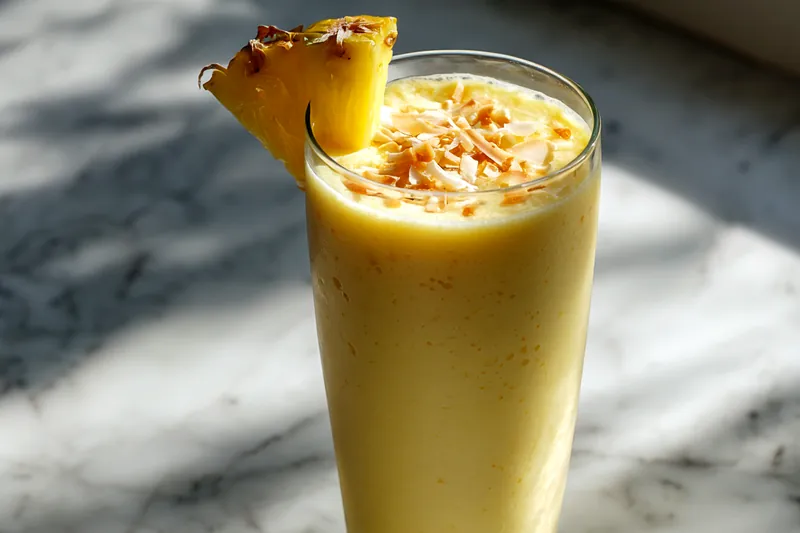
The smoothie is perfectly blended when you can't see any chunks of fruit or ice, and the texture is uniformly smooth and creamy throughout. It should pour easily but maintain a thick, shake-like consistency. If you can see specks of coconut or bits of banana, continue blending for another 15-20 seconds. The color should be a consistent pale yellow throughout with no streaks or layers. When you taste it, the texture should be silky on your tongue with no graininess.
This smoothie pairs beautifully with toasted coconut granola, banana bread, or almond butter toast for a complete breakfast. For a tropical brunch spread, serve alongside açai bowls, fresh papaya slices, or coconut chia pudding. If you're enjoying it as a snack, pair it with macadamia nuts, coconut macaroons, or tropical fruit skewers. The smoothie also makes an excellent base for smoothie bowls topped with fresh mango, kiwi, passion fruit, and crunchy toppings like hemp seeds or cacao nibs.
Absolutely! This smoothie is an excellent base for protein powder. Add one scoop of vanilla or unflavored protein powder for a post-workout treat. Blend the protein powder with the liquids first before adding the frozen fruit to prevent clumping. Vanilla protein pairs particularly well with the tropical flavors, while collagen peptides dissolve seamlessly without affecting the taste. If using protein powder, you may need to add an extra 2-3 tablespoons of liquid to maintain the ideal consistency since protein powder can thicken the mixture.
Store leftover smoothie in an airtight container or mason jar in the refrigerator for up to 24 hours. Fill the container to the top to minimize air exposure and oxidation. The smoothie will naturally separate as it sits, with the liquid settling at the bottom and solids rising to the top. Simply shake vigorously or re-blend for 10-15 seconds before drinking. For longer storage, freeze the smoothie in ice cube trays, then transfer the cubes to a freezer bag. These frozen cubes can be blended with a splash of coconut milk whenever you want a quick smoothie.
Recipe Troubleshooting Guide
Smoothie Too Thin
Problem: Your smoothie turned out watery and lacks the thick, creamy texture you expected.
Solution: Add more frozen banana (half to a whole banana) and blend again. Frozen fruit is key to thickness, so always ensure your banana is completely frozen. You can also add 2-3 tablespoons of Greek yogurt, a handful of ice cubes, or a tablespoon of chia seeds which will thicken as they absorb liquid. Reduce the liquid by 1/4 cup next time if this consistently happens.
Smoothie Too Thick
Problem: The mixture is too thick to blend properly or drink through a straw.
Solution: Add coconut milk or water one tablespoon at a time while blending until you reach the desired consistency. Start with 2 tablespoons and blend for 10 seconds, then check. Be patient and add liquid gradually to avoid overshooting and making it too thin. If you used too much frozen fruit, let it sit for 2-3 minutes to slightly soften before adding more liquid.
Bitter or Tart Flavor
Problem: The smoothie tastes too acidic or bitter instead of sweet and tropical.
Prevention: This usually means your pineapple wasn't ripe enough or your banana was underripe. Add 1-2 teaspoons more honey or maple syrup to balance the acidity. You can also add a few dates or a tablespoon of vanilla protein powder for natural sweetness. Next time, ensure your banana has brown spots (indicating ripeness) and choose pineapple that smells sweet at the base. A pinch of sea salt can also help balance and enhance the natural sweetness.
Grainy Texture
Problem: The smoothie has a gritty or grainy texture instead of being smooth.
Recovery: This typically happens with shredded coconut or if your blender isn't powerful enough. Blend for an additional 30-45 seconds on the highest speed setting. If using shredded coconut, soak it in the coconut milk for 5 minutes before blending to soften it. Alternatively, use coconut cream instead of shredded coconut, or strain the smoothie through a fine-mesh sieve if the graininess bothers you. Ensure you're using sweetened coconut flakes rather than large coconut chips for better blending.
Separating or Layering
Problem: The smoothie separates into layers shortly after making it.
Prevention: Some separation is natural as the heavier ingredients settle. Blend for a full 60 seconds to properly emulsify all ingredients. Adding the yogurt helps bind everything together and prevents separation. If it still separates, add 1 teaspoon of chia seeds or ground flaxseed which act as natural emulsifiers. Always give it a quick stir before drinking, and serve immediately for the best texture. Using frozen fruit instead of ice also helps maintain consistency longer.
Flavor Balance Issues
Too Sweet: If too sweet, add a squeeze of fresh lime juice or a pinch of sea salt to balance. You can also add more Greek yogurt for tanginess or a handful of spinach which won't affect flavor but will tone down sweetness.
Too Salty: This is rare but if it happens, blend in more pineapple and banana to dilute. Add a teaspoon of honey to mask any saltiness. The natural sugars will help balance the sodium.
Bland: Boost flavor with a teaspoon of vanilla extract, a pinch of cinnamon, or fresh lime zest. Add a tablespoon more of shredded coconut or a few drops of coconut extract. Sometimes the issue is temperature - make sure your smoothie is well-chilled as flavors taste more vibrant when cold.
Selecting the Best Ingredients
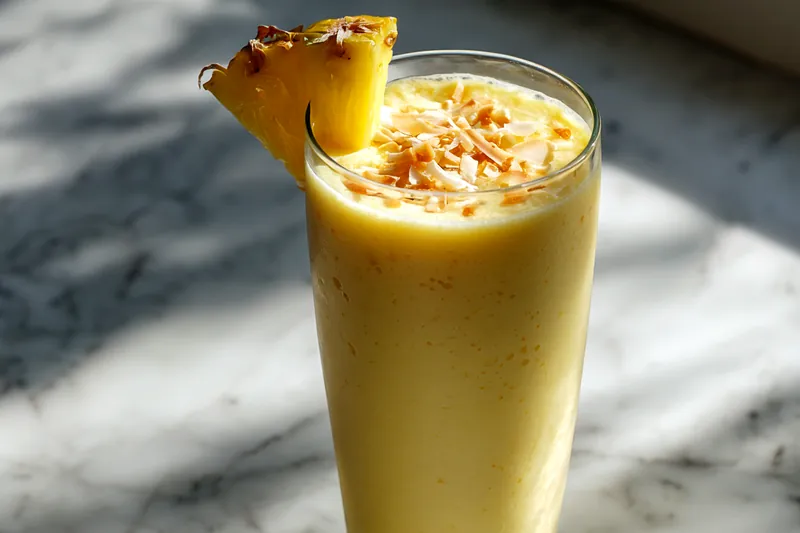
Choosing ripe, quality fruit makes all the difference in this smoothie. For pineapple, look for fruit that's golden-yellow rather than green, gives slightly when pressed, and smells sweet at the base. The leaves should pull out easily when tugged gently. If you can't find ripe fresh pineapple, frozen chunks are an excellent alternative and often more consistent in sweetness since they're frozen at peak ripeness. For bananas, the sweeter and riper, the better. Look for fruit with plenty of brown spots on the peel, which indicates the starches have converted to natural sugars.
Coconut milk quality varies significantly between brands. For the creamiest results, choose full-fat coconut milk from a can rather than the carton variety, which is typically diluted. Shake the can before opening, as the cream often separates and rises to the top. Thai Kitchen and Native Forest brands are consistently reliable. When selecting yogurt, Greek yogurt provides more protein and thickness, while coconut yogurt keeps the recipe completely plant-based and enhances the tropical flavor. Avoid yogurts with added sugars since the fruit provides plenty of natural sweetness.
Essential Ingredient Notes
- Pineapple Selection: Choose pineapple that feels heavy for its size and has a sweet aroma at the base. Avoid fruit with soft spots or fermented smells. Fresh is ideal, but frozen pineapple chunks are more convenient and provide better consistency. If using fresh, core and chunk the pineapple, then freeze the pieces for at least 2 hours before blending for optimal texture.
- Coconut Milk: Always use full-fat canned coconut milk for the creamiest texture. The light versions don't provide enough richness and can make your smoothie watery. Shake the can well before opening to reincorporate the separated cream. Store leftover coconut milk in an airtight container in the refrigerator for up to 4 days, or freeze in ice cube trays for future smoothies.
- Banana Ripeness: Use overripe bananas with brown spots for maximum sweetness and the best flavor. Slice and freeze them at peak ripeness so you always have some ready. Frozen banana not only adds sweetness but creates the thick, creamy texture that makes this smoothie feel indulgent. Peel before freezing to make blending easier and faster.
Mastering the Perfect Blend
The order you add ingredients to your blender matters more than you might think. Start with liquids first, which allows the blades to move freely and creates a vortex that pulls down the frozen ingredients. Next add soft ingredients like yogurt and banana, then finish with the hardest items like frozen pineapple and ice. This layering technique prevents the blades from getting stuck and ensures even blending without having to stop and stir multiple times. Most blending issues stem from adding ingredients in the wrong order or overloading the blender.
Achieving that perfect smoothie consistency is all about balance and knowing when to stop blending. Under-blending leaves you with chunks, while over-blending can incorporate too much air and make the smoothie foamy rather than creamy. Blend on high speed for 45-60 seconds for most blenders. Listen for the change in sound when the mixture becomes smooth. The motor noise will become consistent rather than choppy. Stop and check the texture by tilting the blender. The smoothie should slowly cascade down the sides rather than being completely liquid or stubbornly stuck.
The Frozen Fruit Technique
Using frozen fruit instead of ice is the professional secret to restaurant-quality smoothies. Frozen fruit provides coldness without diluting the flavor as ice does when it melts. The fruit's cellular structure changes when frozen, making it blend into an incredibly smooth, almost ice-cream-like consistency. For best results, freeze banana slices and pineapple chunks on a parchment-lined baking sheet until solid, then transfer to freezer bags. This prevents clumping and ensures pieces blend evenly. Your smoothie will be naturally thick, creamy, and intensely flavored without any wateriness.
Tropical Pineapple Coconut Smoothie
📋 Ingredients
Base Ingredients
- 1 tablespoon honey or maple syrupOptional for extra sweetness; adjust based on fruit ripeness
- 1 teaspoon vanilla extractEnhances the tropical flavor and adds aromatic depth
- 1/4 cup shredded coconutUse sweetened coconut flakes; toast for extra flavor
Flavor Enhancers
- 2 cups fresh pineapple chunksCan substitute with frozen; ensure it's ripe for sweetness
- 1 cup coconut milkUse full-fat canned for creamiest results
- 1 medium ripe banana, frozenMust be frozen for proper thickness; look for brown spots
- 1/2 cup Greek yogurt or coconut yogurtGreek adds protein; coconut keeps it vegan
- 1/2 cup ice cubesOmit if using all frozen fruit
- Fresh pineapple wedge for garnishAdds visual appeal and tropical presentation
Instructions
Prepare Ingredients
Gather all ingredients and ensure your pineapple is cut into chunks. If using fresh banana, slice and freeze it for at least 2 hours beforehand for a thicker, creamier consistency.
Blend Base Ingredients
Add the pineapple chunks, coconut milk, frozen banana, and Greek yogurt to a high-speed blender. Pour in the vanilla extract and add ice cubes if using fresh fruit instead of frozen.
Add Sweetness and Coconut
Add the honey or maple syrup if desired, and the shredded coconut. The sweetness can be adjusted based on the ripeness of your fruit and personal preference.
Blend Until Smooth
Blend on high speed for 45-60 seconds until completely smooth and creamy. Stop to scrape down the sides if needed. The mixture should be thick but pourable. If too thick, add a splash more coconut milk; if too thin, add more frozen banana or ice.
Serve and Garnish
Pour the smoothie into two tall glasses. Top with additional toasted shredded coconut and a fresh pineapple wedge on the rim of each glass. Serve immediately while cold and creamy.
Recipe Notes & Tips
Storage
Refrigerate leftover smoothie in an airtight container for up to 24 hours. Shake well or re-blend before serving as separation is natural. For longer storage, freeze in ice cube trays and blend with fresh coconut milk when ready to enjoy.
Serving Suggestions
Serve immediately for best texture. Pair with coconut granola, banana bread, or almond butter toast for a complete breakfast. Can also be poured into bowls and topped with fresh tropical fruit, chia seeds, and granola for a smoothie bowl.
Variations
Add a handful of spinach for extra nutrition without affecting taste. Use mango instead of pineapple for a different tropical twist. Add a scoop of vanilla protein powder for a post-workout version. Substitute almond milk for coconut milk if preferred, though the coconut flavor will be less pronounced.